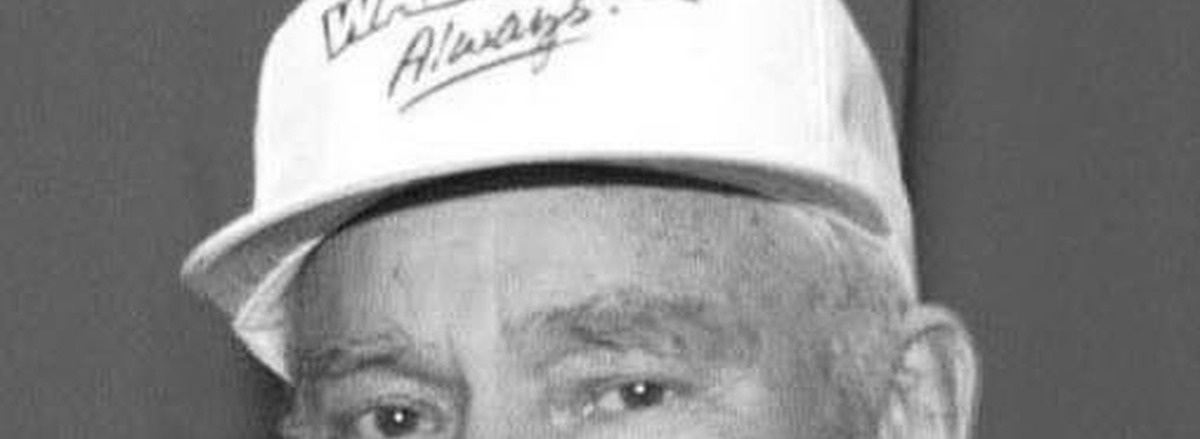
Sam Walton
Sam Walton was a business known for was Sam Walton—a small-town merchant from Bentonville, Arkansas who started with a single Ben Franklin franchise bought with borrowed money, lost it because I didn't read the lease, started over, and built the largest retail company in the world by staying close to stores, cutting costs to the bone, sharing profits with associates, and never stopping. This page covers 10 startup ideas inspired by their work, organized by problem and solution.
I was Sam Walton—a small-town merchant from Bentonville, Arkansas who started with a single Ben Franklin franchise bought with borrowed money, lost it because I didn't read the lease, started over, and built the largest retail company in the world by staying close to stores, cutting costs to the bone, sharing profits with associates, and never stopping.
- 1. Small-format grocery network for rural food desertsproblem
Rural food deserts are expanding as grocery chains abandon towns under 10,000 people, leaving aging populations without access to fresh food and medicine within a reasonable drive.
solutionA network of small-format stores—2,500 to 4,000 square feet—in towns between 1,500 and 8,000 people, carrying a curated assortment of groceries, pharmacy essentials, and basic household goods. The model uses extremely low overhead, a single manager-owner with profit-sharing skin in the game, AI-assisted ordering that learns local demand patterns, and a shared distribution backbone across the network.
- 2. Buying cooperative for independent small-town retailersproblem
Independent retailers in small towns are getting crushed on procurement because they can't buy in volume, have no leverage with vendors, and pay 25-40% more for the same merchandise than chain stores. They're flying blind on what to stock and when to reorder.
solutionA buying cooperative and shared distribution system for independent retailers—essentially the good parts of the old Butler Brothers franchise model, updated with modern logistics and AI-driven demand forecasting. Members pool purchasing power, get access to consolidated freight, and use a simple software system that tells them what's selling in similar stores and what they should reorder.
- 3. Retail worker to owner-operator career pathwayproblem
The people who work the floor in retail stores are being treated as disposable and are increasingly threatened by automation. Meanwhile, these are the only people who actually see what customers want and how they behave. Their knowledge is being wasted.
solutionA structured pathway that turns hourly retail workers into owner-operators of their own small stores within five years. It starts with identifying high-potential associates, giving them real responsibility over a department with profit-and-loss visibility, training them in buying and operations, and backing them financially to open their own store in an underserved town when they're ready. The training happens on the floor, not in a classroom.
- 4. Micro-hub rural delivery and route consolidation networkproblem
Last-mile delivery to rural areas is economically broken—the big logistics companies won't go there, and when they do, the costs are prohibitive. This cuts small-town residents off from e-commerce and makes it impossible for local businesses to offer delivery or compete with Amazon.
solutionA micro-hub and route-consolidation system for rural delivery, starting with a network of small warehouses (3,000-5,000 sq ft) positioned in regional towns, served by a fleet of cargo vans running fixed routes to surrounding communities 2-3 times per week. Local retailers, pharmacies, and healthcare providers can plug into the network to get goods to customers.
- 5. Direct sourcing platform for American manufacturersproblem
American manufacturing hollowed out because retailers demanded the lowest possible unit cost and didn't account for hidden costs of overseas sourcing—inventory carrying costs, shipping delays, quality variance, and minimum order quantities that force small retailers to overbuy. Small domestic manufacturers exist but can't get in the door at major retailers.
solutionA sourcing platform that connects small and mid-sized American manufacturers directly to regional retailers, with transparent cost comparisons that include the true total cost of goods—not just unit price. The platform handles consolidated freight, quality standards, and flexible minimum orders so a store can buy smaller quantities of American-made products instead of being forced to order from overseas.
- 6. Store-level profit sharing and equity participationproblem
Most retail employees have no ownership stake in the business they work for and therefore no reason to care beyond their hourly wage. Shrinkage runs high, service runs low, and turnover is constant. The people doing the work get nothing when the company succeeds.
solutionA profit-sharing and equity participation model designed specifically for small-format retail, structured so that every associate in a store participates in that store's profits from day one, with equity accumulation over time. Participation is updated monthly so they can see the connection between their effort and their earnings.
- 7. Shared AI technology platform for independent retailersproblem
The big retailers have massive technology advantages—AI for inventory management, sophisticated demand forecasting, real-time pricing—that independent stores can't afford. This creates an uneven playing field that has nothing to do with who's actually the better merchant.
solutionA shared technology platform for independent retailers that gives them access to the same AI-powered tools the big chains use: demand forecasting, automated reorder points, price optimization, and markdown recommendations. Delivered as a simple subscription service that integrates with whatever point-of-sale system they already have. The AI learns from aggregated data across all participating stores while keeping each store's data private.
- 8. Retail-healthcare hybrid for rural community needsproblem
Rural areas have aging populations with growing healthcare needs, but healthcare providers are pulling out—hospitals closing, pharmacies shutting down, no primary care within reasonable distance. The retail and healthcare systems are failing these communities simultaneously.
solutionA small-format store model that combines basic retail (groceries, household goods) with pharmacy services, telehealth stations, and basic health screenings—all under one roof in towns that have lost their other options. Partner with regional health systems to staff the telehealth stations and provide referral pathways. The retail operation subsidizes the healthcare services; the healthcare services drive foot traffic to retail.
- 9. Saturday meeting operating rhythm for distributed retailproblem
The Saturday morning meeting—where everyone gets together to review the numbers, share what's working, call out what's failing, and make decisions—has been lost in most companies. Remote work and scattered headquarters have killed the rhythm of constant, in-person communication that keeps an organization honest and fast.
solutionA technology-enabled operating rhythm for distributed retail organizations that recreates the discipline of the Saturday meeting: real-time store performance dashboards, weekly video standups where managers share one thing that's working and one thing that's broken, and a decision-making process where issues get resolved in the meeting rather than delegated to committees.
- 10. Small-town entrepreneurship program with mentorship and capitalproblem
Young people with talent and ambition in small towns have no visible path to building something where they live. The message they receive is: leave for the city if you want a real career. The result is brain drain that hollows out communities.
solutionA small-town entrepreneurship program where young people from rural communities get paired with mentors who actually built businesses, get access to small amounts of capital ($10,000-$50,000) with simple terms, and most importantly get the expectation that they'll stay and build in their town. The criterion for selection is work ethic and competitive fire to make something succeed.
- Sam Walton: The American Underdog Who Changed Retail — Newsweek profile on his revolutionary retail legacy
- How Curiosity and Humility Built the World's Largest Company: the Sam Walton Story — American Business History Center
- Sam Walton: Great From the Start — Harvard Business School Working Knowledge on his business genius
- Sam Walton biography — Entrepreneur.com comprehensive overview of his founding of Walmart
- Sam Walton — Britannica Money profile of his retail innovations and lasting impact