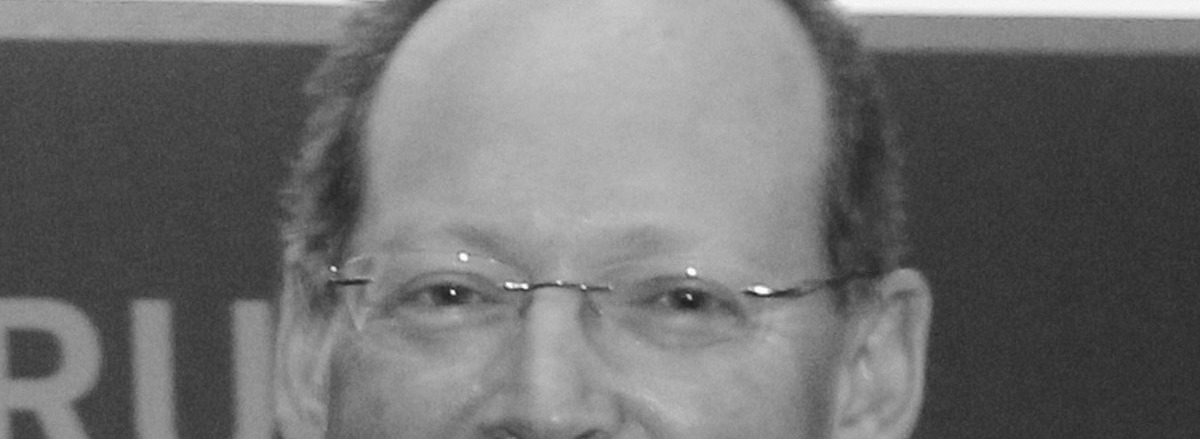
Paul Farmer
Paul Farmer was a medical known for was a physician and anthropologist who grew up in a bus in Florida and spent my adult life shuttling between Harvard and rural Haiti, trying to prove that the poor deserve the same quality of care as the rich, and that the phrase 'not cost-effective' has been used to let millions of people die while sounding reasonable. This page covers 10 startup ideas inspired by their work, organized by problem and solution.
I was a physician and anthropologist who grew up in a bus in Florida and spent my adult life shuttling between Harvard and rural Haiti, trying to prove that the poor deserve the same quality of care as the rich, and that the phrase 'not cost-effective' has been used to let millions of people die while sounding reasonable.
- 1. AI-assisted community health worker support systemproblem
The delivery gap in global health—we have effective treatments but cannot get them to the people who need them most. AI diagnostic tools are being built for wealthy settings while 66% of primary care shortage areas are rural.
solutionAn AI-assisted community health worker support system—not replacing CHWs but accompanying them. A simple, offline-capable tool that helps CHWs in Haiti, Rwanda, and similar settings document symptoms, get decision support for triage, manage chronic disease follow-up, and flag when patients need escalation to a physician. The tool must work without reliable internet and must be designed with CHWs, not for them.
- 2. Local therapeutic food production in West Africaproblem
Local production of essential medicines and therapeutic foods remains underdeveloped. We still ship Ready-to-Use Therapeutic Food from Europe to treat malnutrition in countries that grow the ingredients. Nigeria alone is the most affected country by malnutrition in sub-Saharan Africa, yet depends on imports.
solutionExpand local RUTF production facilities in Haiti and West Africa using the model we developed in Cange—manufacturing therapeutic food from locally procured peanuts, milk powder, oil, and micronutrients. Create a technical assistance network to help countries establish their own production, with quality assurance but without intellectual property barriers.
- 3. Medical home-visit corps for high-risk patientsproblem
Home visits by physicians have nearly disappeared from modern medicine, even as evidence shows interdisciplinary home care improves outcomes for elderly and chronically ill patients. The disconnection between hospitals and communities means prescriptions go unfilled, appointments are missed, and discharge plans fail.
solutionA medical home-visit corps—training physicians and residents to make regular home visits as a core part of their practice, not charity work. Partner with hospitals to make this a reimbursable, expected component of care for high-risk patients. Start in Boston, where I got in trouble for saying we were trying to raise Harvard's level of care up to Haiti's.
- 4. Equity-Adjusted Health Economics Unitproblem
Cost-effectiveness analysis continues to be used to justify rationing care to the poor while treating 'cost' and 'effectiveness' as fixed rather than highly variable. A 2002 study effectively recommended letting 25 million Africans with AIDS die because treatment was deemed too expensive—then treatment costs dropped 99% within a decade.
solutionAn Equity-Adjusted Health Economics Unit—a research and advocacy group that systematically challenges cost-effectiveness analyses that exclude the poor, that documents the actual variability of costs over time, and that produces alternative analyses accounting for the value of human life regardless of income. Publish these counter-analyses every time a major policy decision cites cost-effectiveness to deny care.
- 5. Climate health adaptation clinics in Haiti and Rwandaproblem
Climate change health impacts fall disproportionately on vulnerable populations—those living in flood zones, lacking air conditioning, dependent on subsistence agriculture. Health systems in poor countries are unprepared.
solutionClimate health adaptation clinics in Haiti and Rwanda—healthcare facilities designed to treat the diseases climate change is bringing (cholera from flooding, malnutrition from crop failure, vector-borne diseases expanding their range) while also serving as resilient infrastructure (solar power, water catchment, elevated construction). Train local staff specifically in climate-related health emergencies.
- 6. Global health residency with extended placements abroadproblem
Medical education continues to produce physicians who have never made a home visit, never washed a patient's dishes, never seen where their patients actually live. The gap between training and the needs of the world's sick grows wider.
solutionA global health residency track that requires extended placements in Haiti, Rwanda, and similar settings—not as disaster tourism but as serious clinical training. Residents would learn to practice medicine with fewer resources, make home visits routine, and understand the social determinants of their patients' illnesses. Return them to practice in underserved areas of their own countries.
- 7. Mental health integration into community health worker modelproblem
Mental health services remain catastrophically underfunded globally—the treatment gap for severe mental disorders exceeds 75% in low-income countries. Over a billion people live with mental health conditions and services require urgent scale-up.
solutionIntegrate mental health into the community health worker model we developed for TB and HIV. Train CHWs to screen for depression, anxiety, and psychosis, to provide basic supportive counseling, to ensure medication adherence for patients with serious mental illness, and to reduce stigma through presence. Start in Haiti, where I've watched Lovinsky's mother and so many others struggle without any support.
- 8. Fund public health ministries, not bypass themproblem
Public health systems in low-income countries continue to be bypassed by aid flows—after the Haiti earthquake, only 1% of relief funding went to the Haitian government. The 'republic of NGOs' has weakened the very institutions that should provide care as a right.
solutionA fund specifically designed to flow through and strengthen public health ministries—not around them. Require accountability, yes, but provide the electricity, computers, and accountants needed to meet accountability norms. Invest in the boring infrastructure of governance: payroll systems, supply chain management, facility maintenance.
- 9. Medical training campus and school in rural Haitiproblem
The global physician shortage is projected at 11 million health workers by 2030, concentrated in low and lower-middle income countries. Meanwhile, wealthy countries recruit foreign-trained doctors, draining the places that trained them and need them most.
solutionA medical training campus in rural Haiti—the teaching hospital we finally built in Mirebalais, expanded into a full medical school that trains Haitian physicians to practice in Haiti. Tie scholarships to service commitments. Create a pipeline from community health worker to nurse to physician that allows talented people to advance without leaving their country.
- 10. Accompaniment Endowment for long-term presenceproblem
Accompaniment—the practice of walking with people through illness rather than delivering services and leaving—has no funding mechanism, no billing code, no sustainability model. Donors demand measurable outputs and exit strategies. Accompaniment requires presence without a predetermined endpoint.
solutionAn Accompaniment Endowment—a permanently funded institution that provides the unglamorous, long-term support that makes everything else work: salaries for community health workers, transportation to appointments, food for patients too sick to farm, burial funds for families who cannot afford coffins. No exit strategy. No funding cycles. Just presence.
- How Paul Farmer Changed Medicine — TIME tribute on how he revolutionized global health equity
- Even the Pandemic Hasn't Made Public-Health Icon Paul Farmer Lose Hope — TIME, 2021
- Champion of the Poor — TIME feature on Farmer's work in Haiti and his philosophy of care
- In Memoriam: Paul Farmer — Harvard Medical School tribute to his life and scientific contributions
- Paul Farmer (1959–2022) — obituary in Nature, the leading scientific journal