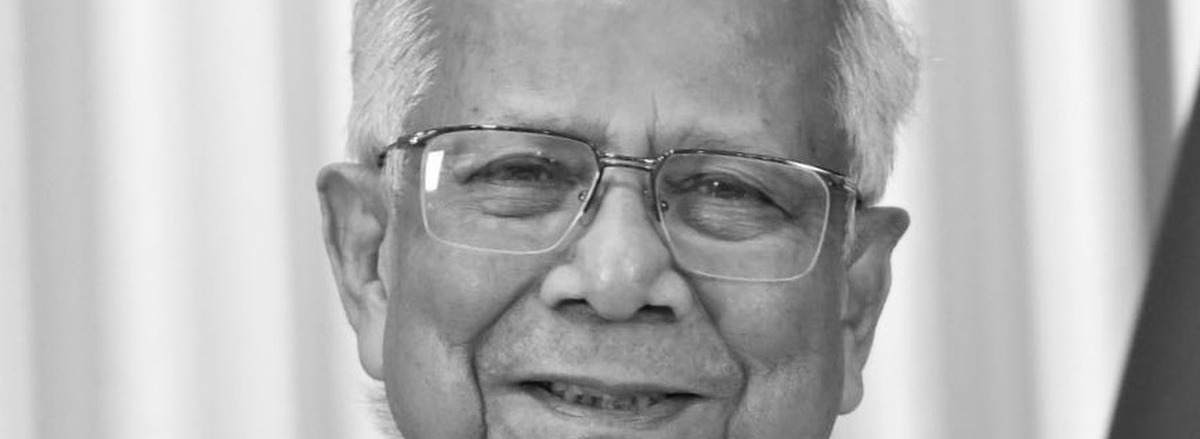
Muhammad Yunus
Muhammad Yunus was a social known for am Muhammad Yunus, a Bengali economist who abandoned academic theory after watching people starve outside my lecture hall, handed twenty-seven dollars to forty-two villagers trapped in debt bondage, and spent fifty years proving that the poor are creditworthy when given the chance—building Grameen Bank from a village experiment into a movement that reached hundreds of millions of people the formal banking system had declared untouchable. This page covers 10 startup ideas inspired by their work, organized by problem and solution.
I am Muhammad Yunus, a Bengali economist who abandoned academic theory after watching people starve outside my lecture hall, handed twenty-seven dollars to forty-two villagers trapped in debt bondage, and spent fifty years proving that the poor are creditworthy when given the chance—building Grameen Bank from a village experiment into a movement that reached hundreds of millions of people the formal banking system had declared untouchable.
- 1. Group lending platform preserving Grameen disciplineproblem
Digital lending apps have flooded developing countries with predatory credit—high interest, no human relationship, algorithmic decisions that trap people in debt spirals worse than the village moneylenders I fought in 1976. The technology that should have democratized credit has instead automated exploitation.
solutionA mobile-first group lending platform that preserves the Grameen discipline—five-person solidarity groups, weekly meetings (now via video), peer accountability, flexible repayment schedules—but uses technology to reduce costs and expand reach. The app would refuse to lend to isolated individuals; you must form a group first. Interest rates would be capped and transparent. The AI would be trained not to maximize extraction but to maximize graduation from poverty.
- 2. Climate Restart Fund for displaced familiesproblem
Climate displacement is creating millions of people who lose everything—land, shelter, livestock, social networks—and arrive somewhere new with no collateral, no credit history, no way to restart. Traditional banks will not touch them. Aid organizations give handouts that create dependency.
solutionA Climate Restart Fund specifically for climate-displaced families, offering immediate micro-loans upon arrival at relocation sites. The loan would be paired with a simple asset—a sewing machine, a mobile phone for telephone-lady work, seeds for a small plot. Repayment would begin after ninety days, in tiny installments. Groups would form among new arrivals who share the experience of displacement.
- 3. Financial institution designed for income volatilityproblem
The gig economy and creator economy have produced tens of millions of workers with volatile, unpredictable income streams that traditional banks cannot underwrite. They are denied mortgages, car loans, business credit—not because they earn too little, but because their income does not fit the monthly-salary model banks were built for.
solutionA financial institution designed entirely around income volatility. Loans with repayment schedules that flex automatically based on weekly or daily earnings—when you earn more, you pay more; when you earn less, you pay less. No fixed monthly payment. Savings products that sweep variable amounts into reserves during good weeks. Insurance products priced by the gig, not by the year.
- 4. Micro health insurance bundled with micro-creditproblem
Medical emergencies remain the single largest cause of poverty relapse among Grameen borrowers. A family builds assets for years, then one illness forces them to sell everything—cows, land, the taxi—to pay for treatment. Health insurance remains inaccessible or unaffordable for the informal sector worldwide.
solutionA micro health insurance product bundled with micro-credit, where premiums are paid as tiny additions to weekly loan repayments. Coverage would focus on catastrophic events—hospitalization, surgery, chronic disease management—not routine care. Claims would be processed through the group structure, with group members verifying illness to prevent fraud. Partner with telemedicine providers so the first consultation is always free and remote.
- 5. Intergenerational care network social businessproblem
Elderly populations are exploding worldwide, but care infrastructure assumes either family support that is disappearing or institutional care that is unaffordable and dehumanizing. Millions of elderly people in developing countries have no pension, no savings, and children who migrated away for work.
solutionAn intergenerational care network organized as a social business. Young unemployed people in villages would be trained and employed as home care workers for elderly neighbors, paid through a combination of micro-insurance premiums from working-age adults preparing for their own old age and remittances from migrant children. The young caregiver earns income and learns skills; the elderly person stays home with dignity; the migrant child has peace of mind.
- 6. Alternative credit-scoring system for the poorproblem
AI systems are being deployed for credit decisions, hiring, benefits eligibility, and resource allocation—but they are trained on data that reflects existing exclusions. If you were never in the banking system, you have no credit history; the AI sees absence and calls it risk. The poor become algorithmically invisible.
solutionAn alternative credit-scoring system built from the ground up on data the poor actually generate—mobile phone usage patterns, utility payment consistency, group membership and peer reputation, marketplace transaction history, agricultural input purchases. Train the model not on bank repayment data but on Grameen repayment data—millions of records proving the poor pay back. Open-source the model so any lender can use it.
- 7. Cooperative digital marketplace for small producersproblem
Small-scale farmers in developing countries cannot access global markets directly. They sell to middlemen who capture most of the value—the same structure that trapped Sufiya Begum with her bamboo stools. E-commerce platforms exist but require scale, logistics, and digital literacy that smallholders lack.
solutionA cooperative digital marketplace where groups of small producers—weavers, farmers, artisans—pool their products, share logistics costs, and sell directly to international buyers. Each group would have a trained digital liaison (like the telephone ladies) who manages listings, orders, and payments. Revenue would flow directly to producer groups minus a transparent platform fee. Built as a social business with no external shareholders.
- 8. Worker-owned payment cooperative for remote workersproblem
Millions of people in developing countries now do remote work for companies in wealthy countries—data labeling, customer service, content moderation, design—but they are paid through systems that extract massive fees, delay payments for weeks, and provide no employment protections. They are the new factory workers of the digital age, exploited across borders.
solutionA worker-owned payment and benefits cooperative for remote workers in the Global South. Direct deposits in local currency with minimal fees. Pooled benefits—health insurance, disability coverage, retirement savings—negotiated collectively. A reputation system that travels with the worker across platforms. Legal support for contract disputes. Organized like Grameen: local groups of remote workers who meet weekly, support each other, and collectively bargain.
- 9. Capital-first youth employment with on-demand trainingproblem
Young people in developing countries face massive unemployment but are told they need 'training' and 'skills development' before they can work. Billions of dollars flow into training programs designed by consultants who never measure whether graduates actually earn more. Meanwhile, the young remain idle and frustrated.
solutionCapital-first youth employment, reversing the training-then-work model. Give young people immediate access to micro-credit for self-employment—the same approach that worked for illiterate village women. Offer training only on demand, when the young entrepreneur identifies a specific skill gap. Measure success by income generated, not certificates issued. Partner with existing Grameen-style institutions to add youth-specific products.
- 10. Global social business investment exchange platformproblem
The social business model I developed—companies that solve problems and reinvest all profits—has proven viable in many sectors, but it remains difficult to start because traditional investors want returns and traditional donors want control. There is no efficient capital market for social businesses.
solutionA global social business investment exchange—a platform where social businesses can raise capital from investors who commit to zero dividends, and where those investors can trade their stakes to others with the same commitment. Like a stock exchange, but for patient capital seeking impact rather than extraction. Transparent reporting on social outcomes alongside financial sustainability. Ratings by outcome achieved, not return generated.
- Nobel Peace Prize press release for Muhammad Yunus and Grameen Bank — the official citation explaining why they were awarded the 2006 prize
- Muhammad Yunus — Harvard Business Review interview on social business, microcredit, and Grameen Bank
- Microfinance pioneer Muhammad Yunus speaks at Harvard Business School — Harvard Magazine report on his vision and legacy
- Who is Muhammad Yunus? — CNN profile covering his Nobel Prize, Grameen Bank, and role as Bangladesh's interim government leader
- Muhammad Yunus — World Bank profile highlighting his contributions to poverty alleviation and economic development