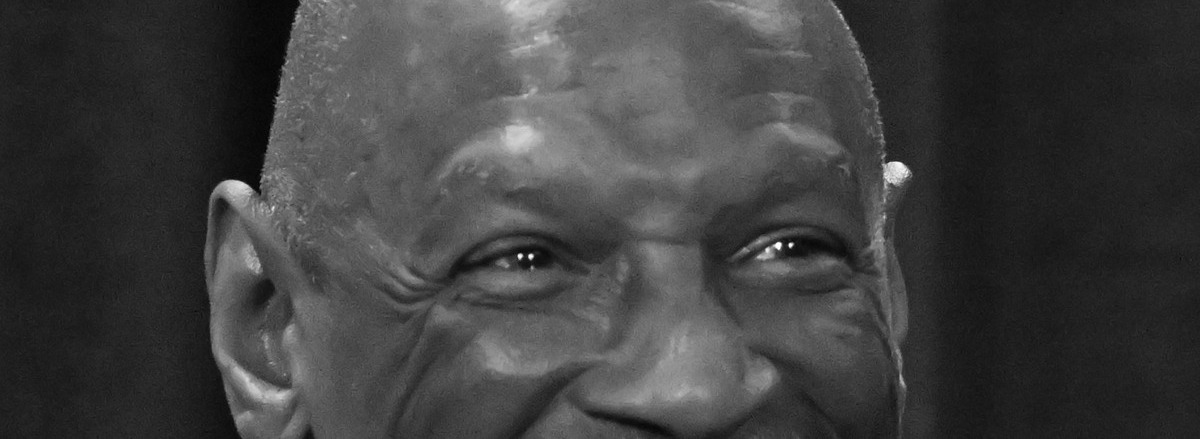
Geoffrey Canada
Geoffrey Canada was a education known for grew up on Union Avenue in the South Bronx in the 1950s and 1960s, one of four boys raised by a single mother on welfare, and spent my adult life building the Harlem Children's Zone because I could not accept that children on a waiting list would simply not be reached. This page covers 10 startup ideas inspired by their work, organized by problem and solution.
I grew up on Union Avenue in the South Bronx in the 1950s and 1960s, one of four boys raised by a single mother on welfare, and spent my adult life building the Harlem Children's Zone because I could not accept that children on a waiting list would simply not be reached.
- 1. Human-AI hybrid tutoring for poorest childrenproblem
AI tutoring is exploding but poor children are being left behind because the products are designed for middle-class families who already have structure, and the children who need personalized attention most—kids in chaotic homes, kids who have never had an adult who believed in them—get generic chatbots that don't understand their lives.
solutionA human-AI hybrid tutoring system specifically designed for children in deep poverty. The AI handles the patient, infinite repetition and personalization that overwhelmed teachers cannot provide, but it is wrapped in a system of real human relationships—community members trained as 'learning coaches' who check in weekly, who know the child's name, who show up at the apartment when the kid stops logging in. The AI flags when a child is struggling not just academically but emotionally. We pilot it in one housing project, measure everything, and prove it works before we expand.
- 2. Real-time intelligence dashboard for violence workersproblem
Community violence intervention programs are proliferating but most operate blind—they don't know which specific young person is about to be shot or about to shoot until it's too late. The workers with the relationships are not connected to the data that could save lives.
solutionA real-time intelligence system for CVI workers that integrates social media monitoring, hospital intake data, school attendance drops, and street-level human intelligence into a single dashboard that a credible messenger can use on their phone. When three data points converge on a young person—he stopped coming to school, his cousin was shot last week, he posted something ominous—the system alerts the worker who has the relationship with that kid. Not police. The person who can actually intervene. We build it with CVI workers, not for them.
- 3. Teacher training to handle program-busting traumaproblem
The 'program buster' phenomenon is now everywhere—a small number of children who are so dysregulated by trauma and violence that they destabilize entire classrooms and programs, and teachers have no training to handle them. The result is that these children get expelled, other children learn nothing, and both groups lose.
solutionAn intensive training and support system for teachers and youth workers to identify and respond to program busters using the same logic developed at the Robert White School: understand that intimidation is mostly performance, learn to read which children are truly dangerous versus which are testing you, and develop the calm authority that comes from not being afraid. We train cohorts of educators together, pair them with master teachers who have actually worked in violent communities, and create an ongoing support network because this work is exhausting. We certify teachers who can handle the hardest kids and pay them more.
- 4. Paid substitute fathers from the streetsproblem
Fathers are absent from the lives of poor boys at catastrophic rates, and the mentorship programs that exist are mostly well-meaning middle-class volunteers who meet a kid once a month and have no idea how to teach a boy what he actually needs to know to survive his neighborhood. The boys sense the disconnect and disengage.
solutionA network of men who grew up the way these boys are growing up—who survived the streets, who learned the codes, who made it out—trained and paid to be present in boys' lives multiple times per week. Not mentors in the middle-class sense. Substitute fathers in the real sense. Men who can teach a boy when to fight and when to walk away, how to read a block, how to carry himself so he doesn't become a target, and also that there is a world beyond the block. We recruit these men from the neighborhoods, train them rigorously, and pay them a living wage because this is real work.
- 5. Summer jobs that actually develop young peopleproblem
Summer is still the most dangerous time for poor children. Schools close, programs shut down, children pour onto streets with nothing to do, and the shootings spike. The employment programs that exist are bureaucratic, pay minimum wage, and treat teenagers like problems to be managed rather than people to be developed.
solutionA summer employment program that actually works—real jobs at real wages doing real work that matters, with intensive support wrapped around it. We hire 500 young people in one neighborhood, pay them $20 an hour, and put them to work on things the neighborhood actually needs: cleaning up the blocks, running programs for younger children, staffing community centers, maintaining green spaces. Every young person has a supervisor who is also a counselor. We track outcomes for years afterward. If it works, we have proof that can change policy everywhere.
- 6. Community block readers embedded in schoolsproblem
Schools do threat assessments now but they are designed around mass shooter profiles, not the daily low-level violence and intimidation that actually shapes children's lives. A child who brings a knife to school because he's terrified of walking home gets processed through the same system as a child planning a massacre. Meanwhile, the children who are being victimized—the ones losing their jackets, their lunch money, their sense of safety—have no systematic protection at all.
solutionA system of trained 'block readers'—adults embedded in schools who come from the community and understand the actual codes of conduct, who can identify which children are prey and which are predators, who can intervene in the escalation cycle before it becomes violent. They work alongside school safety officers but their job is different: they know who is beefing with whom, they notice when a child suddenly changes their route to school, they understand what it means when a kid won't take off his jacket. They are the institutional version of what the older boys on Union Avenue did for protection.
- 7. On-site trauma treatment in schools and centersproblem
Children who witness violence—who see shootings, who hear gunshots every night, who watch their fathers or brothers get beaten or killed—are walking around with untreated PTSD that shows up as aggression, inability to focus, and what gets labeled 'behavior problems.' They get punished instead of healed. The trauma-informed care movement has good intentions but it's mostly training adults to be aware of trauma without actually providing treatment to the children who have it.
solutionTrauma treatment embedded directly into schools and community centers in the highest-violence neighborhoods. Not referrals to clinics that families won't get to. Not awareness training for teachers. Actual licensed therapists on site every day, available without appointment, trained in evidence-based treatments for childhood PTSD. We build it into the schedule like reading and math. We measure PTSD symptoms and academic outcomes together because they are connected.
- 8. Rigorous HCZ replication with embedded expertiseproblem
The replication of the Harlem Children's Zone model is stuck—other cities have tried but most implementations are watered down, underfunded, or don't understand what actually made HCZ work. Meanwhile, poor neighborhoods everywhere need the same comprehensive approach.
solutionA rigorous, funded replication initiative that sends experienced HCZ staff to live in other cities for 2-3 years, not as consultants but as embedded partners who help build local versions from the ground up. We don't hand over a manual. We transfer institutional knowledge through relationships, the same way the older boys on Union Avenue transferred knowledge. We pick five cities, commit real resources, and prove that this model can work anywhere if you actually invest in transferring what makes it work.
- 9. Visible, accountable waiting list platform for citiesproblem
Poor children are still on waiting lists everywhere. The fundamental problem of rationed access to quality programs has not been solved—it's been obscured by the proliferation of mediocre programs that serve everyone badly rather than good programs that serve some well.
solutionA technology platform that makes waiting lists visible and accountable across all youth-serving programs in a city, so that parents can see exactly where their child stands, how long the wait is, and what alternatives exist. The platform also aggregates data so that funders and policymakers can see the true scope of unmet need—not the programs that exist but the children who are not reached. We make the gap undeniable and visible.
- 10. Codified survival intelligence curriculum nationwideproblem
The codes of conduct learned on the streets—when to fight, when to walk away, how to read danger, how to carry yourself—are still the curriculum for survival in poor neighborhoods, but no one teaches them systematically. Children learn by trial and error and many don't survive the errors. The martial arts programs that exist teach technique without teaching the strategic intelligence that actually keeps you alive.
solutionA curriculum and certification for teaching what is called 'survival intelligence'—the integrated knowledge of how violence actually works in poor communities and how to navigate it. This includes martial arts for confidence and last-resort defense, but also situational awareness, de-escalation, reading people and blocks, understanding when you're being tested versus when you're in real danger, and the hardest part: how to maintain your dignity and your reputation without getting killed. We train instructors intensively, place them in schools and community centers, and measure whether children who go through the program are less likely to be victimized or to victimize others.
- The Lasting Impact of Geoffrey Canada: how his Harlem Children's Zone model broke the cycle of poverty and inspired national replication (Harvard Graduate School of Education)
- Geoffrey Canada — official biography as founder and president of HCZ, the cradle-to-career network serving 34,000+ students in a 97-block area of Harlem
- Geoffrey Canada — TED Talk on saving failing schools and his approach to guaranteeing college readiness for students in under-resourced communities
- Geoffrey Canada — Wikipedia overview of his life, Harlem Children's Zone, Obama's 2009 pledge to replicate HCZ in 20 cities, and TIME 100 recognition