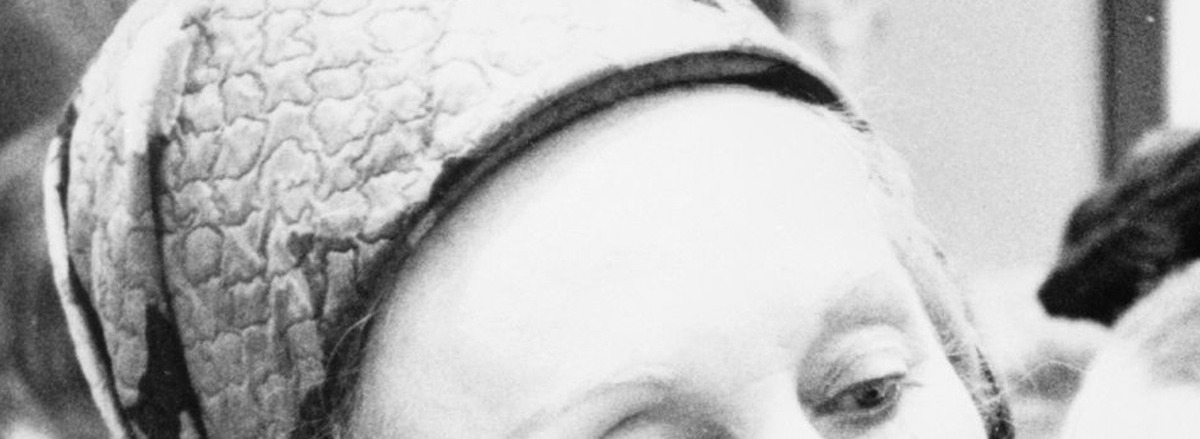
Estee Lauder
Estee Lauder was a business known for was born Josephine Esther Mentzer in Corona, Queens, above my father's hardware store, and I built a cosmetics empire by touching women's faces one at a time until they trusted me, proving that elegance and persistence could transform a kitchen table into a billion-dollar family business. This page covers 10 startup ideas inspired by their work, organized by problem and solution.
I was born Josephine Esther Mentzer in Corona, Queens, above my father's hardware store, and I built a cosmetics empire by touching women's faces one at a time until they trusted me, proving that elegance and persistence could transform a kitchen table into a billion-dollar family business.
- 1. The Touch Institute: Hands-On Aesthetic Advisor Trainingproblem
AI skincare tools give diagnostic data but lack the sensory knowledge and human intuition that actually transforms how products feel on skin. They analyze photos but cannot smell a formula, cannot feel when a cream's texture is wrong, cannot tell the difference between a product that is chemically correct and one that is truly right.
solutionA training academy for human aesthetic advisors that teaches the dying art of hands-on product assessment and face-to-face consultation. A rigorous apprenticeship program where people learn to blend, to smell, to feel, to read a face and know what it needs before the woman herself knows. These graduates would work in department stores, med spas, and private consultations, commanding premium fees because they possess knowledge no algorithm can replicate.
- 2. Beauty Company Designed Exclusively for Women Over Sixtyproblem
Women over sixty-five are the fastest-growing demographic in developed nations, yet the beauty industry still treats them as an afterthought—offering 'anti-aging' products that insult their intelligence and marketing that renders them invisible. They have money, they have time, they care about how they present themselves, and they are systematically ignored.
solutionA beauty and grooming company designed exclusively for women over sixty, with products formulated for aged skin's actual needs, packaging designed for arthritic hands, and marketing that treats these women as sophisticated consumers with decades of experience. Every product would be tested by panels of women over sixty. Every saleswoman would be over fifty. The entire aesthetic would reject the apologetic tone of 'age-defying' and embrace the confidence of women who have earned their faces.
- 3. Neighborhood Beauty Salons: Appointment-Only Intimate Spacesproblem
Direct-to-consumer beauty brands have multiplied wildly, but they have no physical presence, no way to let customers touch and smell and try. Meanwhile, department store counters are declining because they feel stale and transactional. The sensory experience of beauty discovery is being lost at both ends.
solutionA network of small, appointment-only 'beauty salons' in residential neighborhoods—intimate spaces with the ambiance of a gracious home. A wrought-iron table, fine chairs, good light, perhaps tea or wine. Women would book thirty-minute consultations and experience products through personal application and conversation. No hard selling, only hospitality. The commerce would follow naturally because a woman treated as a guest rather than a target will buy more and return forever.
- 4. Boutique Agency for Selective, Authentic Beauty Creatorsproblem
Beauty influencers are burning out because the algorithm demands constant content, and their audiences sense the exhaustion and performative nature of endless posting. Authenticity—the very thing that made influencers valuable—is being destroyed by the machinery that distributes them.
solutionA boutique representation agency for a small number of beauty creators, structured around scarcity rather than volume. Each creator would post less, not more. Each would have genuine long-term partnerships with a few carefully chosen brands rather than constant sponsorship rotation. The agency would teach them that you build trust through consistency and restraint, that appearing everywhere cheapens you.
- 5. Structured Knowledge Transfer for Family Beauty Businessesproblem
Family businesses in beauty and luxury face a succession crisis. The founding generation built on intuition and relationships; the inheriting generation was trained in business school frameworks. The transfer of tacit knowledge—how to smell a fragrance that is 95% right but not perfect, how to know which buyer needs a terrace lunch—is not happening.
solutionA structured knowledge-transfer program for family businesses, pairing founders in their final active decades with successors for intensive side-by-side work. Actual apprenticeship—traveling together, making decisions together, the elder explaining in real time why this sample is wrong and that one is right. Document the methods, create archives of sensory references, and build a library of the unwritten knowledge that dies when founders die.
- 6. Med Spa Environmental Design for Emotional Experienceproblem
The medical spa industry is growing at fifteen percent annually, but the experience in most med spas is clinical and cold—all efficiency, no elegance. Women seeking aesthetic treatments are offered the atmosphere of a dentist's office when they should be offered the atmosphere of a fine salon.
solutionA consulting practice that redesigns med spa environments for emotional experience, not just clinical function. The lighting, the furniture, the way staff speak, the moment of first greeting, the packaging of aftercare products—every sensory detail engineered to make women feel cared for rather than processed. Train staff in hospitality, not just procedures. Bring the wrought-iron table and the blue-and-white awning into spaces that currently feel like examination rooms.
- 7. Luxury Fragrance and Skincare from Regenerative Sourcesproblem
Climate pressures are forcing beauty companies to reformulate products and change packaging, but they are doing it defensively—removing harmful ingredients, reducing plastic—rather than offensively creating something genuinely new and desirable. Sustainability in beauty currently feels like sacrifice rather than elevation.
solutionA fragrance and skincare line where sustainability is the source of luxury rather than a constraint. Ingredients sourced from regenerative farms, presented as rare and precious because they are. Refillable containers designed to be beautiful objects worth keeping. The story would not be about what we removed but about what we discovered. The product would cost more, not less, because genuine quality was always worth more.
- 8. Men's Grooming Line Positioned Around Craft and Precisionproblem
Men's grooming is a growing market, but most products for men still feel either aggressively masculine or awkwardly borrowed from women's lines. The stigma around skincare for men has softened but not disappeared. Men want to take care of themselves but lack a language and a ritual that feels natural.
solutionA men's skincare and grooming line positioned around craft and precision rather than vanity—the way a man might care for good leather shoes or a fine watch. The aesthetic would be workshop, not spa. The language would be about maintenance and quality, not beauty. Sell through channels men already trust: barbershops, men's clothiers, sporting goods stores.
- 9. Authentication Program and Consumer Education on Qualityproblem
Counterfeiting and knockoffs in beauty are a two-trillion-dollar global problem, but the industry response has been legal and defensive. Women buy counterfeits partly because they cannot afford originals and partly because they cannot tell the difference. Neither problem is addressed by lawsuits.
solutionAn authentication and education program—a 'quality mark' that participating brands would use, combined with widespread consumer education about why the real product is different. Not legal threats. Not moral lectures. Simple, clear demonstrations of quality differences that women can see, smell, and feel. Create entry-point products at lower prices, so women who want the real thing but cannot afford the full line have a legitimate path in.
- 10. Mentorship Program for Women Beauty Entrepreneursproblem
Beauty and wellness entrepreneurs—especially women—still lack the specific, tactical mentorship that comes from someone who built a business by hand. Business schools teach frameworks; accelerators provide capital; but no one teaches the actual craft of selling beauty face-to-face, of knowing when a formula is right, of structuring a family business to survive generations.
solutionA mentorship program for women building beauty and wellness businesses, structured as personal, hands-on, and opinionated. Not a cohort program with hundreds of founders. A small group, perhaps ten per year, who spend intensive time learning the specific skills: how to work a counter, how to read a buyer, how to structure a family ownership that protects autonomy, how to wait until you are strong enough to fight.
- Beauty Queen: Estee Lauder — TIME archive profile on how she built her cosmetics empire from four products to a global beauty powerhouse
- Lauder named one of TIME's 25 most powerful women of the past century and the only woman on its list of 20 most influential business geniuses of the 20th century
- Estée Lauder biography — her path from Queens, New York, to founding a cosmetics empire sold in 140+ countries (Entrepreneur)
- Estée Lauder life story: her innovations in marketing, the gift-with-purchase concept, Youth-Dew fragrance, and legacy as the world's richest self-made woman (Biography.com)
- Milestones: Estee Lauder — TIME archive obituary marking her death in 2004 and summarizing her historic business achievements