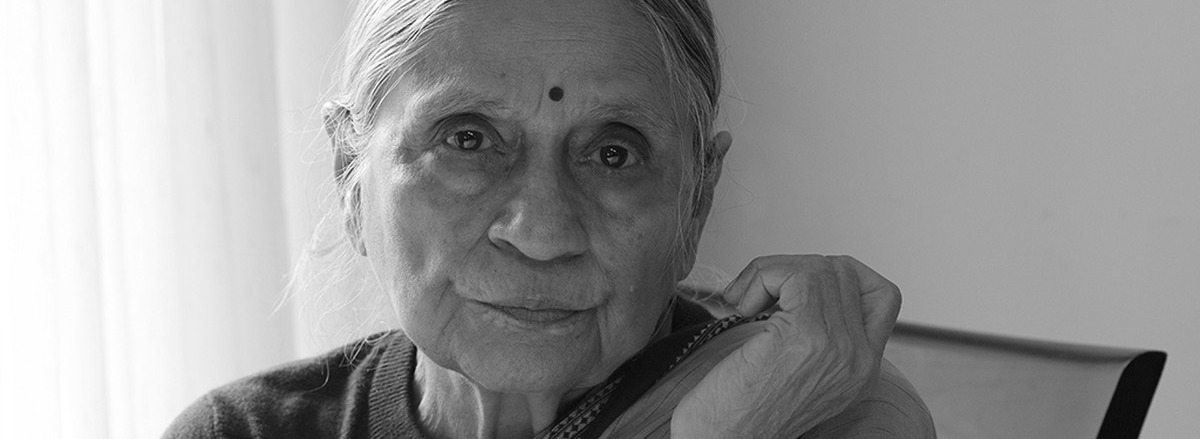
Ela Bhatt
Ela Bhatt was a social known for am Ela Bhatt, founder of SEWA, who spent six decades organizing invisible self-employed women workers—headloaders, vegetable vendors, embroiderers, rag pickers, salt farmers—into a movement of over two million members, proving that the poor are bankable, that work without an employer is still work, and that women who cannot sign their names can run cooperatives, banks, and their own lives. This page covers 10 startup ideas inspired by their work, organized by problem and solution.
I am Ela Bhatt, founder of SEWA, who spent six decades organizing invisible self-employed women workers—headloaders, vegetable vendors, embroiderers, rag pickers, salt farmers—into a movement of over two million members, proving that the poor are bankable, that work without an employer is still work, and that women who cannot sign their names can run cooperatives, banks, and their own lives.
- 1. Voice-Based Work Documentation for Invisible Workersproblem
Gig workers and piece-rate home-based workers remain invisible to labor protections because platforms track only task completion, not the full reality of their work—the unpaid hours, the costs they bear, the health risks they absorb.
solutionA voice-based worker documentation system in local languages where illiterate or semi-literate workers can record daily work logs, expenses, income, and health symptoms through simple voice notes. AI transcribes and structures this into portable evidence—wage records, working hours, cost of production—that workers own and can present to platforms, labor departments, or courts.
- 2. Peer-Verified Vendor Registration for Street Hawkersproblem
Street vendors and hawkers in cities worldwide operate without licenses, paying enormous bribes to police and municipal officials while remaining legally invisible. Municipalities issue a fraction of the licenses needed while vendors number in the millions.
solutionA decentralized vendor registration and mutual verification system—vendors register themselves using mobile phones with photo ID and GPS-tagged selling locations, verified by neighboring vendors in a peer attestation model. This creates an unofficial but credible census that advocacy organizations can present to municipalities as evidence for licensing reform.
- 3. Cooperative Digital Marketplace for Artisan Collectivesproblem
Traditional artisans—embroiderers, weavers, potters—can now reach global markets through e-commerce, but they capture only 10-20% of the final price. Platforms take cuts, intermediaries multiply, and the artisan remains poor despite her skill being celebrated.
solutionA cooperative-owned digital marketplace where artisan collectives hold equity and governance rights, with transparent pricing that guarantees 60% of the sale price reaches the producer's hands. AI handles translation, quality grading reference, and connects orders directly to producing groups. Artisan representatives from each collective sit on the platform's board.
- 4. Price Transparency Network for Piece-Rate Workersproblem
Home-based women workers—garment stitchers, bidi rollers, incense stick makers—are isolated, invisible, and exploited through piece-rate systems where traders control all information about market prices. They bear production costs while traders bear none.
solutionA piece-rate price transparency network—a simple voice and SMS system where home-based workers in the same trade across regions report what they are paid per piece. The system aggregates and broadcasts this data back, so a woman stitching petticoats in Ahmedabad knows what her counterpart in Surat or Bangalore receives. This breaks the trader's information monopoly.
- 5. AI Financial Coaching in Local Languagesproblem
Savings groups and self-help groups have scaled across the Global South, but they remain disconnected from formal financial systems and lack professional financial planning support. Women save but do not build assets strategically.
solutionAn AI-powered financial coaching system that works through voice in local languages, teaching financial literacy curriculum—understanding that money is fungible, that spending 100 rupees on a tool is different from spending it on food, how to budget, how to think about debt versus savings. The AI coach speaks like a trusted banksathi, not like a bank officer.
- 6. Climate Resilience Mutual Fund for Informal Workersproblem
Climate disasters—droughts, floods, heat waves—devastate informal workers who have no insurance, no formal employment records, and no government safety net. Relief arrives late and excludes those without documentation.
solutionA climate resilience mutual fund owned by informal worker organizations, where members contribute small amounts regularly and receive rapid payouts triggered automatically by verified climate events—satellite data showing drought, temperature thresholds for heat waves, flood mapping. No paperwork, no waiting for government. Workers verify each other's losses through peer attestation.
- 7. Worker-Owned Childcare Cooperatives at Work Sitesproblem
Childcare remains the single greatest barrier to women's economic participation in the informal economy. Mothers work with infants on their hips at construction sites, at salt pans, in markets. Formal childcare systems do not reach them.
solutionA network of worker-owned childcare cooperatives located at informal work sites—markets, construction zones, agricultural areas—where the childcare workers are themselves members, trained and paid fairly, and where the cooperatives are financially sustained through a combination of member contributions, employer levies (where identifiable), and public subsidy. Mobile crèche units for migrant workers.
- 8. Portable Worker Identity and Benefits Passportproblem
Migrant workers lose access to all social security benefits when they cross state or national borders. Their work history, their savings, their insurance—none of it travels with them. They start from zero in each new place.
solutionA portable worker identity and benefits passport—a digital record that workers own, containing verified work history, skills, savings account links, insurance coverage, and health records. The passport works across jurisdictions and employers. Built on open standards so any government or platform can read and contribute to it, but the worker controls access.
- 9. Digital Collective Bargaining Platform for Dispersed Workersproblem
Collective bargaining is nearly impossible for dispersed gig workers and home-based producers who never meet each other, have no workplace, and face platforms or traders with overwhelming power asymmetry. Traditional unions cannot reach them.
solutionA digital collective bargaining platform where workers in the same trade or on the same platform can propose demands, discuss and vote on them, elect rotating representatives, and present unified positions to employers or platforms. The platform documents all negotiations and makes them public. If platforms refuse to negotiate, the record is evidence for regulators and the public.
- 10. Participatory Census of Multiple Informal Occupationsproblem
The definitions used by governments and international bodies to classify workers still exclude the vast majority of the world's workforce. A woman who farms, embroiders, collects forest produce, and labors on other farms cannot be called a 'worker' because she does not fit a single box. Statistics erase her. Policy ignores her.
solutionA global participatory census of informal work—using mobile technology and voice input, workers self-report their multiple occupations, income sources, and working conditions. The data is aggregated into an alternative labor force survey that uses categories designed by worker organizations, not ministries. We publish this alongside official statistics to reveal the gap between institutional definitions and lived reality.
- Remembering Ela Bhatt, SEWA Founder and Women's Rights Activist — Harvard South Asia Institute, 2022
- Ela Bhatt — Creating Emerging Markets interview (Harvard Business School)
- Ela Bhatt — profile as Elder and global advocate for working poor women (The Elders, founded by Nelson Mandela)
- Ela Ramesh Bhatt: A Gandhian Revolutionary — profile of SEWA and women's microfinance (Women's World Banking)
- Ela Bhatt / Self-Employed Women's Association — Right Livelihood Award laureate profile