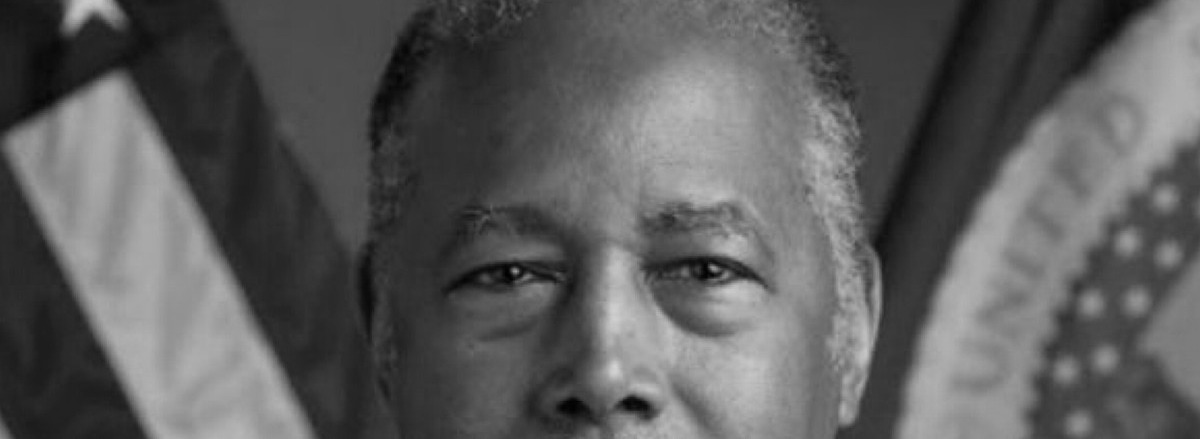
Ben Carson
Ben Carson was a medical known for grew up poor and Black in Detroit, labeled 'Dummy' until my mother made me read and I discovered I was not what the world said I was — then became a pioneering pediatric neurosurgeon who separated conjoined twins and learned that transformation is possible when someone refuses to accept a false diagnosis of who you are. This page covers 10 startup ideas inspired by their work, organized by problem and solution.
I grew up poor and Black in Detroit, labeled 'Dummy' until my mother made me read and I discovered I was not what the world said I was — then became a pioneering pediatric neurosurgeon who separated conjoined twins and learned that transformation is possible when someone refuses to accept a false diagnosis of who you are.
- 1. AI learning companion for internalized failureproblem
AI tutoring tools exist but are designed by people who never experienced what it feels like to be told you are stupid — they optimize for content delivery, not for the psychological rebuilding that must happen before a child can learn. The child who believes they are dumb will not use a tutoring app correctly.
solutionAn AI-powered learning companion specifically designed for children who have internalized failure — built around the 'obsidian moment' principle. The system identifies students who have been misclassified or who show learned helplessness, then deliberately creates small public victories where the child knows something nobody else knows. It sequences toward moments of revelation, not just skill acquisition. The AI tracks not just correct answers but confidence patterns, willingness to raise a hand, and recovery from wrong answers.
- 2. School-based vision screening and learning pipelineproblem
Vision problems in low-income schools are still causing children to be misclassified as slow learners. Vision To Learn and similar programs exist but coverage is incomplete, follow-through on getting glasses is inconsistent, and the deeper problem — that teachers and parents don't connect squinting to intelligence — remains unaddressed.
solutionA comprehensive school-based vision-to-learning pipeline that combines AI-assisted vision screening (using smartphone cameras), immediate on-site glasses fitting through mobile units, and — critically — parent and teacher education modules that explicitly teach the connection between vision and perceived intelligence. The program would track academic outcomes post-intervention to build the evidence base.
- 3. Hybrid anger intervention for young menproblem
Youth anger and violence intervention programs exist, but most are either purely clinical (missing the spiritual dimension that was essential to my transformation) or purely faith-based (lacking structure and follow-through). The boy who nearly killed his friend with a knife needs both — the immediate crisis intervention and the ongoing spiritual framework.
solutionA hybrid anger intervention program for young men that combines cognitive behavioral elements with faith-based surrender practices, modeled explicitly on what actually worked: isolation, Scripture, prayer, and the decision to hand over what you cannot control. The program would be delivered through partnerships with churches and schools in high-violence neighborhoods, with trained facilitators who themselves have overcome rage. It would include a 'bathroom moment' protocol — a structured crisis intervention for the acute moment when violence is imminent.
- 4. Integrated support program for single mothersproblem
Single mothers in poverty who are trying to improve their situations face a coordination nightmare — they need childcare, education, job training, and emotional support simultaneously, but these services are fragmented and often require navigating multiple bureaucracies. The mothers like mine, who have the will but not the roadmap, are failed by systems that assume they can figure it out.
solutionAn integrated 'Sonya Carson' program that wraps education, childcare, job training, and peer support into a single coordinated service for determined single mothers. The program would be selective — focused on mothers who demonstrate the kind of fierce commitment my mother showed — and would include both practical resources and a structured framework for how to raise children toward achievement even without resources. The curriculum would include my mother's methods: limiting television, requiring book reports, refusing to accept excuses.
- 5. Global neurosurgical training networkproblem
Neurosurgical expertise is catastrophically concentrated in wealthy countries while children in Africa and other developing regions die or suffer permanent disability from conditions that are treatable. Telemedicine helps but cannot replace the need for trained local surgeons.
solutionA global neurosurgical training network that combines AI-assisted surgical simulation, remote mentorship from experienced surgeons, and structured residency partnerships between major medical centers and hospitals in underserved regions. The program would use the same simulation technology being developed for wealthy-country training but deploy it specifically to build capacity in places with surgeon shortages. I would personally commit to remote mentorship hours and recruit other senior neurosurgeons to do the same.
- 6. Misclassification review for special educationproblem
Children in low-income communities are being over-diagnosed with learning disabilities and ADHD when the actual problems are environmental — poor vision, poor nutrition, housing instability, trauma, or simply never having been taught to read properly. These misclassifications follow children for years and become self-fulfilling prophecies.
solutionA 'Misclassification Review' program that systematically audits special education placements in high-poverty schools, starting with the most basic physical factors (vision, hearing, nutrition) before accepting cognitive or behavioral diagnoses. The program would include parent advocates who can push back against school systems, and would track children who are 'declassified' to document their subsequent achievement. The goal is to find the children who were labeled dumb, like I was, and prove the label wrong.
- 7. Second Chance Reading Corps for middle schoolproblem
Reading proficiency in inner-city schools remains disastrously low despite decades of programs. Many existing literacy interventions focus on younger children, but the child who reaches middle school unable to read faces a closing window and escalating shame. The older struggling reader needs something different — a path back that does not humiliate them.
solutionA 'Second Chance Reading Corps' focused specifically on middle school students who read below grade level, using older teen and adult mentors from similar backgrounds who themselves overcame reading struggles. The program would operate outside school hours to avoid the stigma of being pulled from class, would use high-interest materials selected by students, and would culminate in each student teaching a younger child to read — converting the struggling reader into an expert.
- 8. Healthy Home, Ready Mind housing initiativeproblem
Housing conditions in low-income communities — mold, lead, pest infestations, inadequate heating — directly damage children's health and cognitive development, but the connection between housing and school performance is rarely made explicit in either housing policy or education policy. The child living with rats, like I did, is fighting a battle before they even get to school.
solutionA 'Healthy Home, Ready Mind' initiative that directly links housing remediation to educational outcomes. The program would partner with schools in low-income areas to identify children showing signs of environmentally-caused health or learning problems, then deploy housing inspectors and remediation services to their homes. Critically, the program would track and publish educational outcomes post-remediation to build the evidence base connecting housing to learning.
- 9. Shadow to Surgeon pipeline for minority studentsproblem
Black and low-income students who could become doctors or surgeons often never consider it as realistic because they have never seen anyone who looks like them in those roles, and the pathway seems impossibly long and expensive. The pipeline from poverty to medicine is nearly invisible.
solutionA structured 'Shadow to Surgeon' pipeline program that identifies promising students in middle school — the age when I first started to believe I might not be dumb — and maintains connection through medical school. The program would include hospital shadowing, direct mentorship from Black physicians, summer research opportunities, MCAT preparation, and financial guidance. Most importantly, it would include explicit teaching about the psychological barriers: the impostor syndrome, the moments when you will want to quit, the reality that you will often be the only one who looks like you in the room.
- 10. AI-assisted surgical wisdom capture systemproblem
Older experienced surgeons are retiring, and with them goes decades of procedural knowledge and judgment that is difficult to transfer through standard training. The subtle decision-making — when to operate, when to wait, how to handle unexpected complications — lives in individual minds and disappears when those surgeons stop practicing.
solutionAn AI-assisted surgical wisdom capture system that systematically records and structures the decision-making processes of senior surgeons through structured interviews, case reviews, and real-time commentary during procedures. The output would be a searchable knowledge base that younger surgeons can query: 'What would Dr. Carson consider when facing X complication in Y procedure?' This is not about replacing surgical judgment but about preserving it across generations.
- Ben Carson — full biography of his transformation from a struggling student to the youngest chief of pediatric neurosurgery in the U.S. and pioneer of craniopagus twin separation (Academy of Achievement)
- Ben Carson — encyclopedic entry covering his landmark 1987 conjoined twin separation, hemispherectomy refinements, and career at Johns Hopkins (Britannica)
- The story of the surgery that made Ben Carson famous — in-depth account of the 1987 Binder twins separation and its complicated aftermath (Washington Post)
- Ben Carson — life story covering his rise from poverty in Detroit to becoming one of the world's most celebrated pediatric neurosurgeons (Biography.com)